
This post contains affiliate links. Please see our disclosure policy.
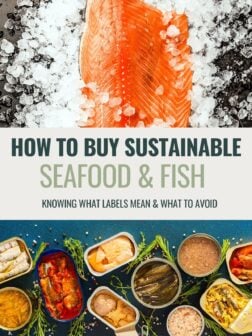
Buying seafood & fish doesn’t have to feel like navigating murky waters. This guide breaks down what all those labels and certifications actually mean, and which fishing and farming practices to steer clear of. Whether you’re shopping at the fish counter or planning your next seafood feast, consider this your cheat sheet for making smarter, more sustainable choices—because good seafood should taste great and do good.
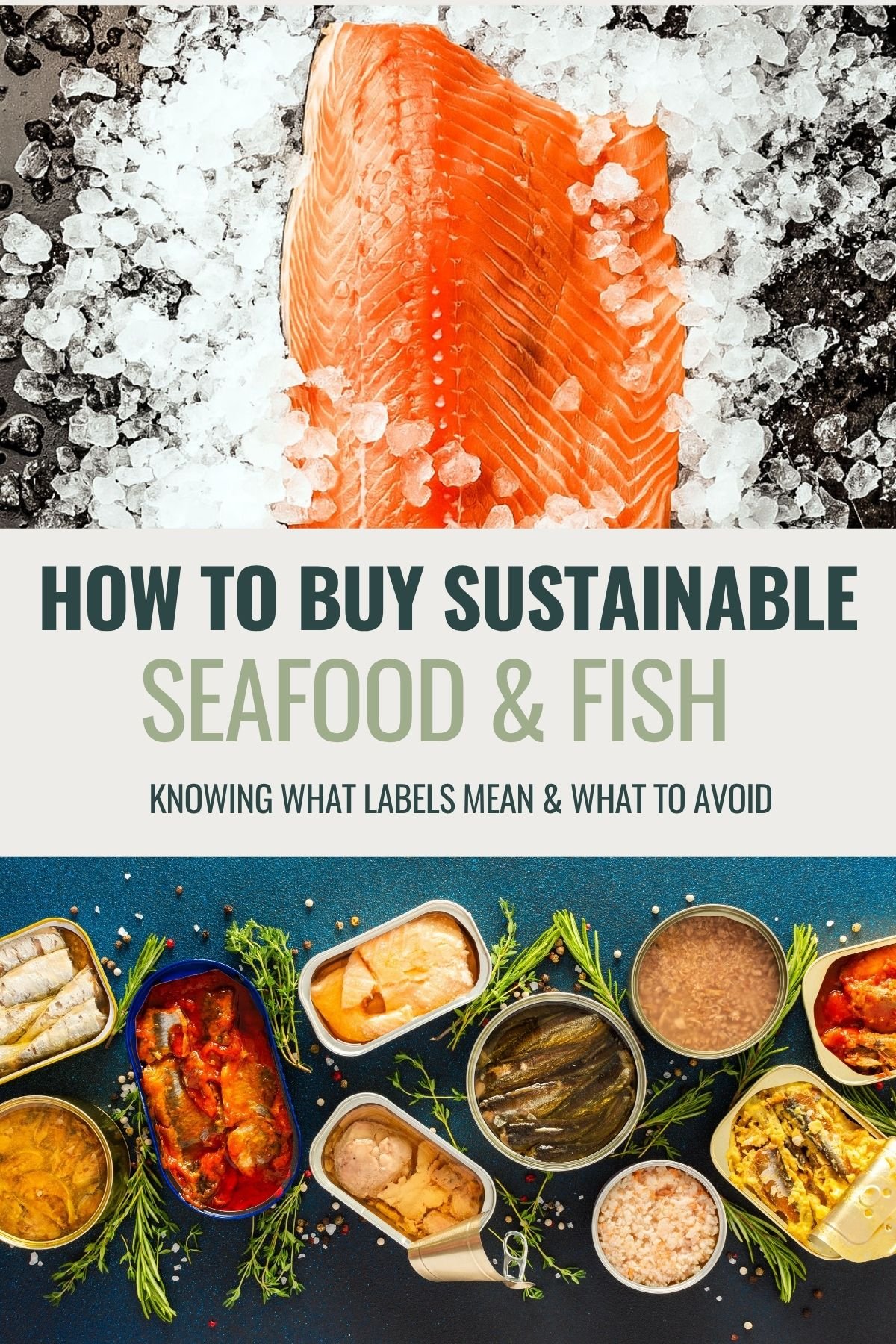
Table of Contents
You want to buy sustainable seafood—but where do you even start? You’re not alone. The confusion around labels, sourcing, and what questions to ask at the fish counter is real, and it’s enough to make even the most enthusiastic home cook throw in the (kitchen) towel. No label? No idea what to ask your fishmonger? No clue what the right answers even sound like?
Yep, it’s a lot.
The truth is, sustainable seafood shopping can feel like learning a new language. There’s a lot to learn when it comes to fishing and farming methods, and I’m still figuring it out myself. But I’ve picked up a few things along the way that have made the whole process way less intimidating.
Here’s what I’ve learned so far, and I hope it’ll help you feel a little more confident next time you’re staring down a seafood case.
Seafood Labels and What They Mean
You should know what to look for on a fish label—yes, it’s more than just “salmon”. You should see the commercial name (what it’s called at market), the scientific name (sometimes posted nearby), how it was sourced (wild-caught, freshwater, or farmed), and where it came from (the catch or production area). It’s the fine print that helps you make smarter, more sustainable choices at the fish counter.
Here are some common labels you’ll see at the grocery store:
- Marine Stewardship Council (MSC)— The product comes from a wild-caught fishery that has been certified as sustainable according to the MSC’s Fisheries Standard. This confirms that the fishery meets proper standards for sustainable fish stocks in order to minimize environmental impact and maintain effective management practices.
- Aquaculture Stewardship Council (ASC)—The product comes from a farm that has been certified as meeting strict environmental and social responsibility standards, including care for the environment, workers, and communities to ensure a more sustainable and responsible choice for shoppers.
- Best Aquaculture Practices (BAP)—The seafood was farmed according to strict standards addressing environmental responsibility, social accountability, food safety, and animal health and welfare. BAP is a third-party certification program, and the label marks that the entire production chain, from hatchery to processing plant, has met these standards.
- Whole Foods Market Responsibly Farmed—In 2011, Whole Foods launched a collaboration with Monterey Bay Aquarium to provide easy-to-understand color-coded sustainability ratings for wild-caught seafood that is not certified by the Marine Stewardship Council. Here’s what to look for:
- Green means go—these fish come from well-managed, abundant fisheries and are caught using environmentally friendly methods.
- Yellow? Proceed with caution—there may be concerns around population levels, fishing practices, or management.
- Red—You likely won’t see any red labels at the Whole Foods fish & seafood counter. The store steers clear of seafood from certain regions altogether due to environmental red flags and other sustainability issues.
Handy Tools When Buying Seafood & Fish
Printable cheat sheet—I’ve created an at-a-glance cheat sheet for you to have handy on your phone or print out for your fridge.
Load up a state-specific consumer guide—This consumer guide will help you at the fish counter so you can avoid all that head-scratching. You can search by species, U.S. region, and even sushi type!
Use Seafood Watch—You can search Seafood Watch for the brands, retailers, and restaurants you support to see if they’re a partner. On this list, you’ll find businesses like Whole Foods, Blue Apron, and Pike Place Fish Co. If you’re in Canada, use SeaChoice. With SeaChoice you can search for sustainable seafood and responsible partners.
How to Buy Sustainable Canned Tuna
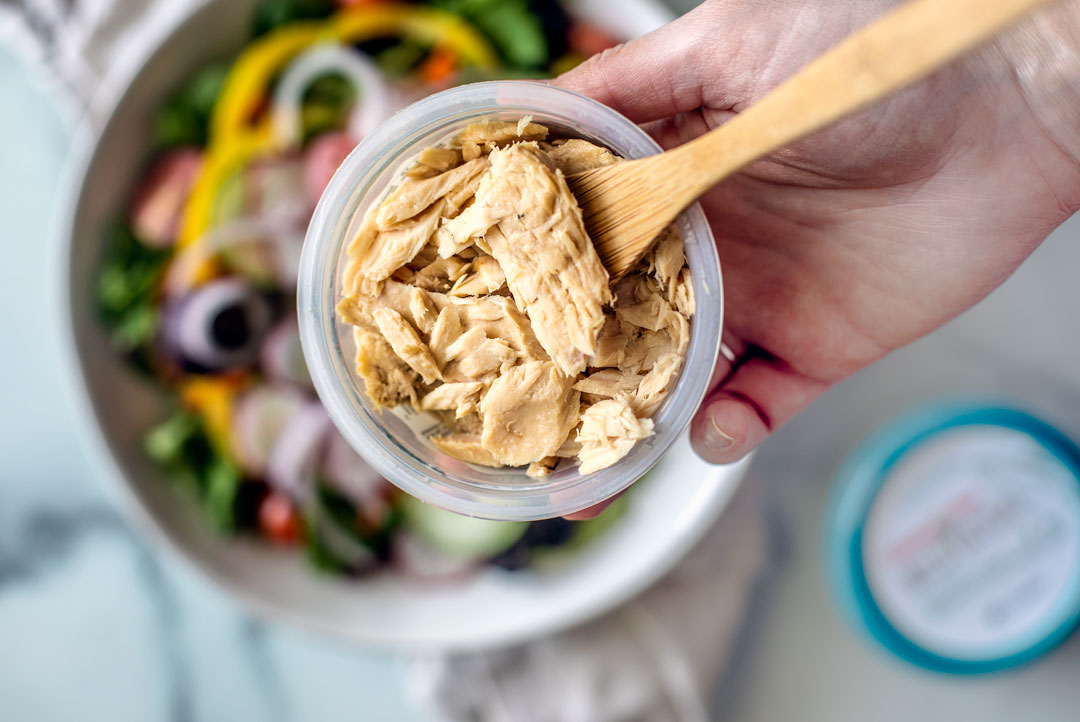
Tuna is a heavyweight in the seafood world—especially in the U.S., where we average over two pounds of canned tuna per person every year. It’s a sushi bar staple, a lunchbox classic, and totally craveable. But here’s the catch: more than half of the world’s most popular tuna varieties are considered unsustainable by Seafood Watch standards. The good news? Sustainable options do exist—you just need to know what to look for (and what to skip).
What to Buy
When shopping for canned or pouched tuna, let the label be your guide. Look for keywords like pole-caught, pole-and-line, troll-caught, FAD-free, free school, or school-caught—these all point to more sustainable fishing methods. Your best bets?
- Albacore, skipjack, or yellowfin from U.S. fisheries
- Albacore, bigeye, skipjack, and yellowfin caught in the Atlantic or Pacific using pole-and-line, trolling, or non-FAD purse-seine methods.
What to Avoid
Skip the bluefin—unless it’s Pacific bluefin from a yellow-rated source (and yes, you’ll want to double-check that). Give tuna from the Indian Ocean a pass, too. As for albacore, bigeye, skipjack, and yellowfin: steer clear if they’re imported and caught with drifting longlines or if they come from purse seine fisheries using FADs (fish aggregating devices). Trust me, the method matters.
Tasty Canned Tuna Recipes to Try
More Canned Fish Options
Sardines & mackerel—These two options are inexpensive, sustainable, healthy, and delicious! There’s a reason we have a lot of canned sardine recipes here on the blog. Not to mention, they’re often canned in infused oils or sauces, which makes them extra tasty.
Canned salmon—Alaskan pink salmon, sockeye, or red salmon is what you’re looking for. The Alaskan salmon fishery is one of the most well-managed, safe, and sustainable fisheries in the world. Try my Sesame Ginger Soba Noodle Bowl With Salmon!
Canned crab—Avoid buying crab from regions like China, India, Indonesia, the Philippines, Vietnam, or Thailand due to potential concerns about sustainability. One of the healthiest crab fisheries lies in North America, notably the West Coast. If you find yourself some sustainable lump crab (Blue Star Foods is a good option), make these Maryland Jumbo Lump Crab Cakes!
Canned shrimp—Look for shrimp harvested in the US from the West Coast or Alaska. Most shrimp that are labelled as “tiny pink shrimp” or “salad shrimp” are products from the US and are considered safe. Read the fine print, and if the country of origin isn’t disclosed, avoid it.
Anchovies, clams, and oysters—Let’s end the canned seafood segment on a high note with the fact that anchovies and bivalves like clams and oysters are safe! They have much less impact on the environment due to their high rate of productivity and low rank on the marine food chain. Try my Clam Pasta With Tomato Sauce for a quick and delicious weeknight meal.
Frequently Asked Questions
Whole Foods, Sprouts, Wegman’s, H Mart, Kroger, Costco, and 99 Ranch Market rank as some of the best grocery stores to shop for sustainable seafood and fish, according to Food Republic. You can also check out their article here to see which stores rank as the worst.
Mollusks like clams, mussels, oysters, and scallops? Total sustainability stars. Same goes for small but mighty forage fish like herring, sardines, and anchovies. These ocean MVPs not only have a low environmental impact—they can actually benefit the ecosystems they’re part of.
Not all seafood is created equal—some options come with a heavy environmental price tag. Overfishing, destructive catch methods, and harm to marine ecosystems land certain species firmly on the avoid list. Think: bluefin tuna, Chilean sea bass, orange roughy, and most imported shrimp. Also in the red zone? Shark, eel, and Atlantic halibut. When in doubt, skip ‘em.
Delicious Sustainable Seafood & Fish Recipes

Fish & Seafood
Crispy Baked Alaska Pollock Recipe

Fish & Seafood
Sweet Chili Air Fryer Salmon Bites

Sandwiches and Wraps
Bang Bang Fish Sliders

Fish & Seafood
Baked Cod With Tomato Herb Butter
If you found my guide to buying seafood & fish useful, please let me know in the 📝 comments below!
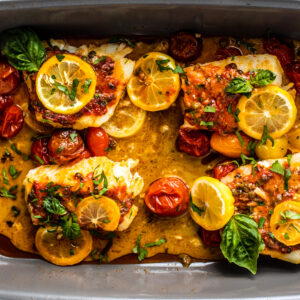
Baked Cod Recipe + A Guide to Buying Seafood & Fish
Ingredients
- 4 6 oz cod fillets, Any mild-flavored white fish will work
- Sea salt and cracked pepper
- 3 tablespoon softened butter
- 1 tablespoon extra virgin olive oil
- 2 garlic cloves, minced
- 2 teaspoons tomato paste
- 1 teaspoon fresh thyme
- 1 teaspoon chopped fresh basil
- 1 teaspoon chopped fresh parsley
- 1 teaspoon drained capers
- 1 large lemon
- 1 cup grape tomatoes, cut in half
- Extra chopped fresh basil and parsley, for garnish
Instructions
- Preheat the oven to 400º F.
- Remove the cod fillets from the fridge, pat them gently with a paper towel, and let them sit on the counter at room temperature for about 15-20 minutes. Bringing the fish to room temp helps you get a more even cook.
- Pop the butter, oil, tomato paste, fresh herbs, capers, garlic, salt, and pepper into a small mixing bowl. Mash and mix it all together until you have yourself a nice little compound butter!
- Place some lemon slices down into the baking dish.Now set your fillets over the lemon slices so they are sitting on top of them. You only need about one or two slices of lemon per filet.
- Divide the compound butter up evenly and spoon the mixture over each filet. Press down on the butter and smother the filets with it so the tops are fully covered.
- Place a slice of lemon or two on top of each fillet, and then pop the grape tomatoes into the pan.
- Transfer the pan to the oven and bake for 12-15 minutes; be sure to check on the fish after 12 minutes. You don’t want to overcook it!
- When it’s ready, remove it from the oven, spoon over some of that pan sauce, and garnish with some fresh basil and parsley.


