
This post contains affiliate links. Please see our disclosure policy.

If you’re looking for a pan-seared Chilean sea bass recipe that doesn’t overthink it, this is the one. A salt-and-pepper crust, a solid sear, and a garlic lemon butter drizzle at the end. Rich, flaky, and weeknight-friendly. Ready in just 15 minutes!
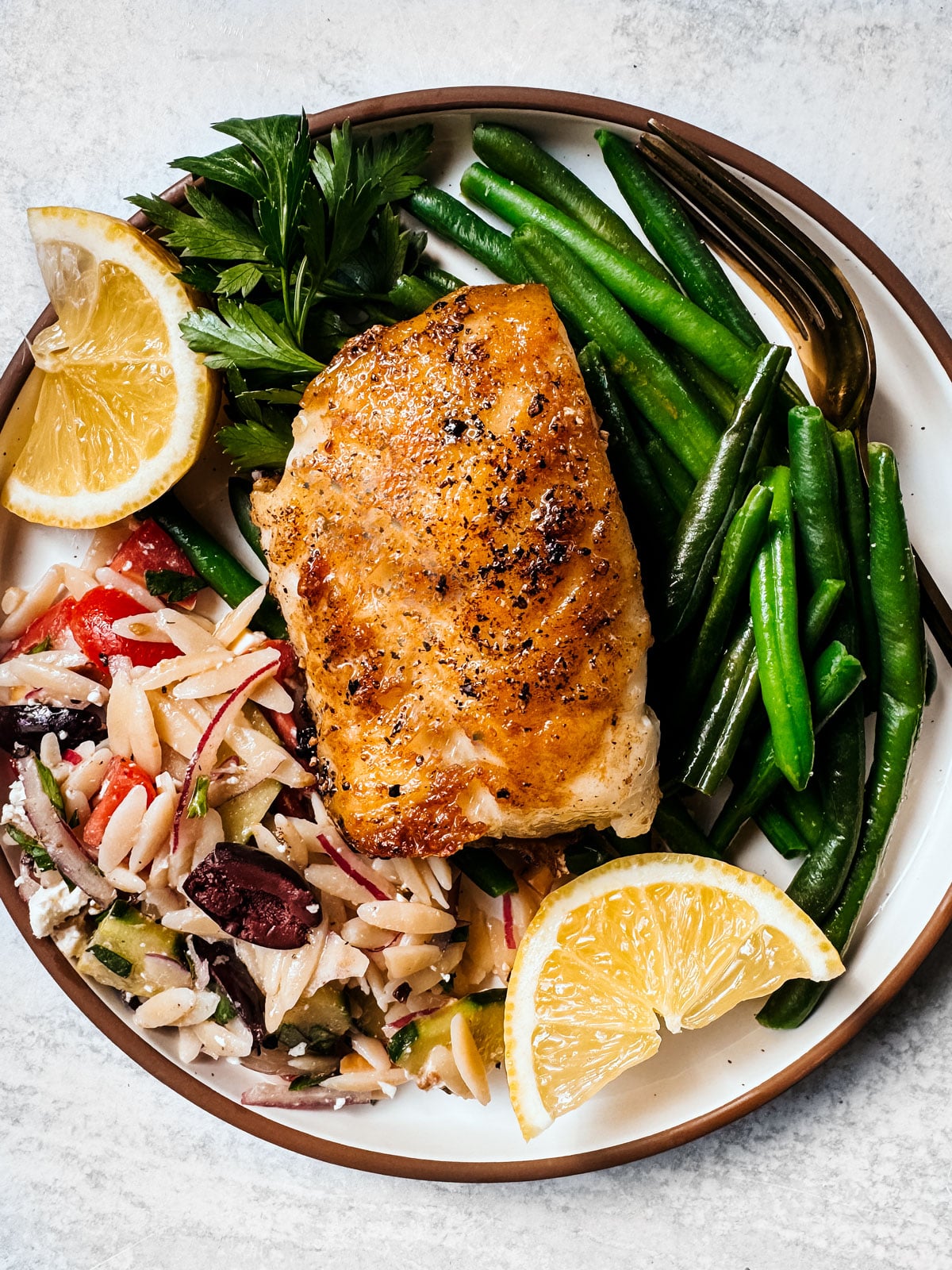
This 15-minute Chilean sea bass recipe is proof that the best ones don’t require much. Salt, pepper, a hot pan, and a garlic lemon butter finish—that’s it. The fish is rich and flaky enough to carry the whole thing, and it pairs with whatever else you’ve got going on.
More mild, white fish recipes that might interest you include this baked Alaska pollock, baked flounder, or my lemon pepper baked grouper recipe.
Table of Contents
- Why This Recipe Works
- Ingredient Overview
- The Difference Between Chilean Sea Bass and Sea Bass
- Step-by-Step: How to Make Pan-Seared Chilean Sea Bass
- Substitutions & Variations
- What to Serve It With
- Storage & Reheating
- Frequently Asked Questions
- Pan-Seared Chilean Sea Bass Recipe
- More Weeknight-Friendly Fish Recipes
Why This Recipe Works
- Salt and pepper are excellent for forming a crust in a hot pan
- Searing the fish first and finishing it in the oven gives you a golden crust from the high heat and an evenly cooked, tender interior without any risk of burning
- The garlic lemon butter finish adds flavor without taking away from the delicate flavor of the sea bass
Ingredient Overview
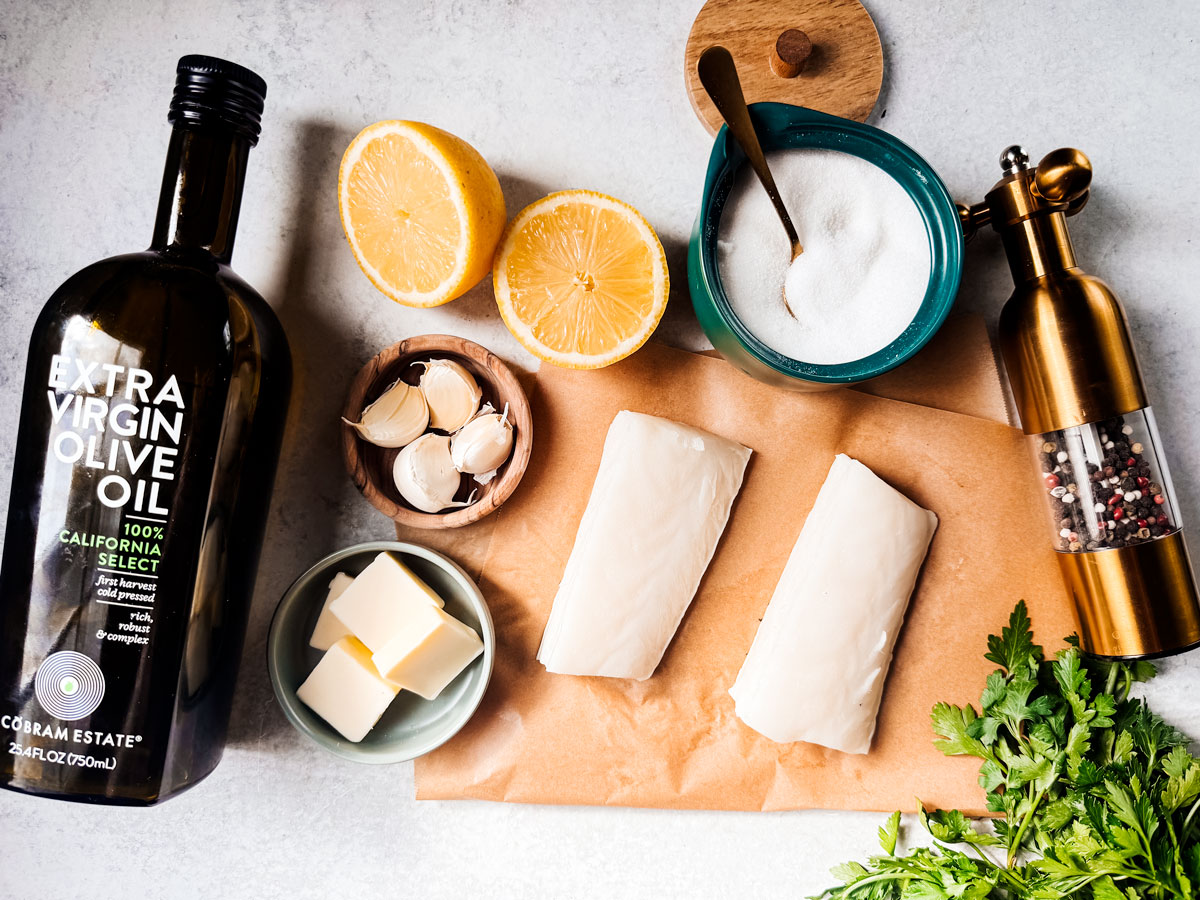
A quick look at the essentials before we dive into the recipe card:
- Chilean Sea bass: Skin on or off, whatever you prefer. But I assure you that with a hot pan, you can get an awesome crisp on that skin, and it’s delicious!
- Sea salt & cracked pepper: Not only are these essential seasonings, but salt draws moisture to the surface and dries it out, which is what you need for a good sear. The pepper adds texture for the crust to grip, which gives you that dark, crunchy bark instead of just a browned fish.
- Garlic: Infuses the butter for a garlicky flare.
- Lemon: Adds a note of brightness that always works with mild white fish.
The Difference Between Chilean Sea Bass and Sea Bass
Despite the name, Chilean sea bass and sea bass aren’t really the same thing. Chilean sea bass is Patagonian toothfish (the new name is a rebrand)—a cold-water fish with high fat content that gives it that rich, buttery flavor it’s known for. “Sea bass” is more of a catch-all term covering leaner, smaller species like black or European sea bass. Good in their own right, but a different experience entirely.
Step-by-Step: How to Make Pan-Seared Chilean Sea Bass
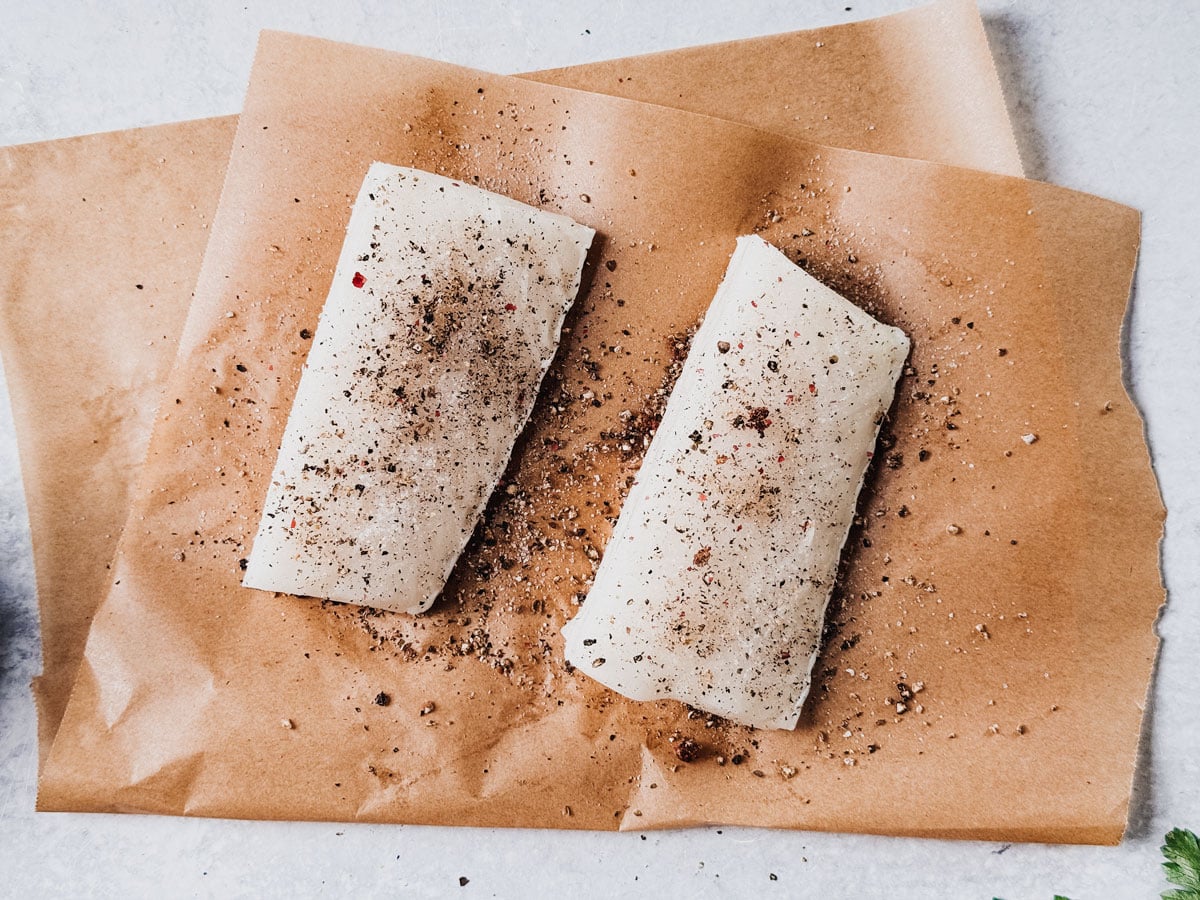
Step 1: Prepare the Fillets
Preheat the oven to 375ºF.
Gently pat the fillets with a paper towel to remove extra moisture. Generously season both sides of each fillet with sea salt and cracked black pepper—skin can be seasoned, too.
Set the fillets aside and let them sit for at least 15 minutes to come to room temperature. This ensures a more even cook.
Step 2: Sear the Sea Bass
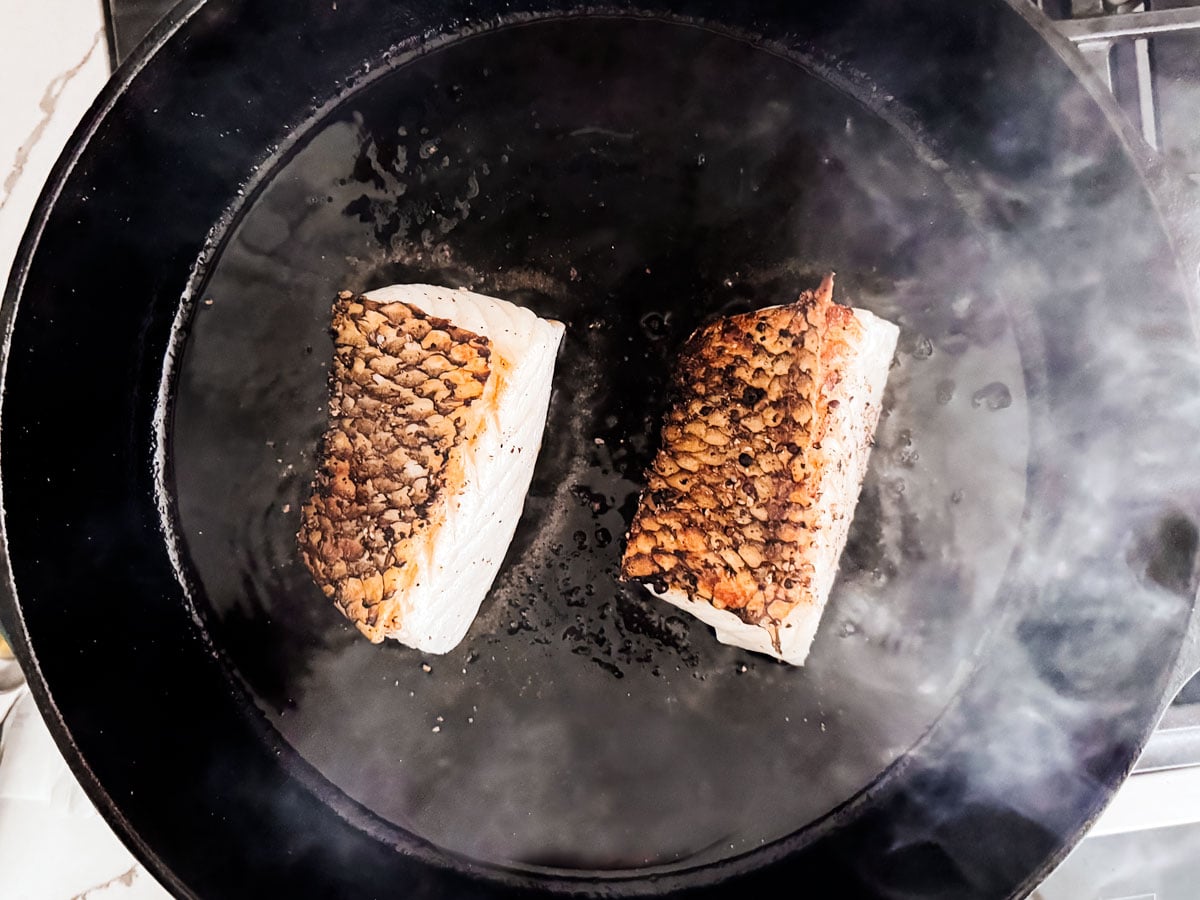
- For skin-on: Heat the oil in an oven-safe skillet, like cast iron. Once the oil is hot and shimmering, carefully place the fillets in it, skin-side down, pressing them down for a few seconds so they don’t seize up. Let them cook for 3 minutes, then carefully flip and sear the other side for 2 minutes.
- For skinless: Place the fillets in the pan, pressing down for a few seconds. Sear for 2 minutes—you won’t be flipping the fish over.
Tip: I like to use a splatter guard to avoid a greasy mess in my kitchen. Another great tool when pan-frying fish is a fish spatula, for its length and stability.
Step 3: Transfer the Pan to the Oven
- For skin-on: Transfer the hot pan to the oven and bake for 5-8 minutes, or until the fish is opaque, flaky, and has an internal temperature of 135-140ºF.
- For skinless: Transfer to the oven for 8 minutes.
Step 4: Make the Garlic Lemon Butter
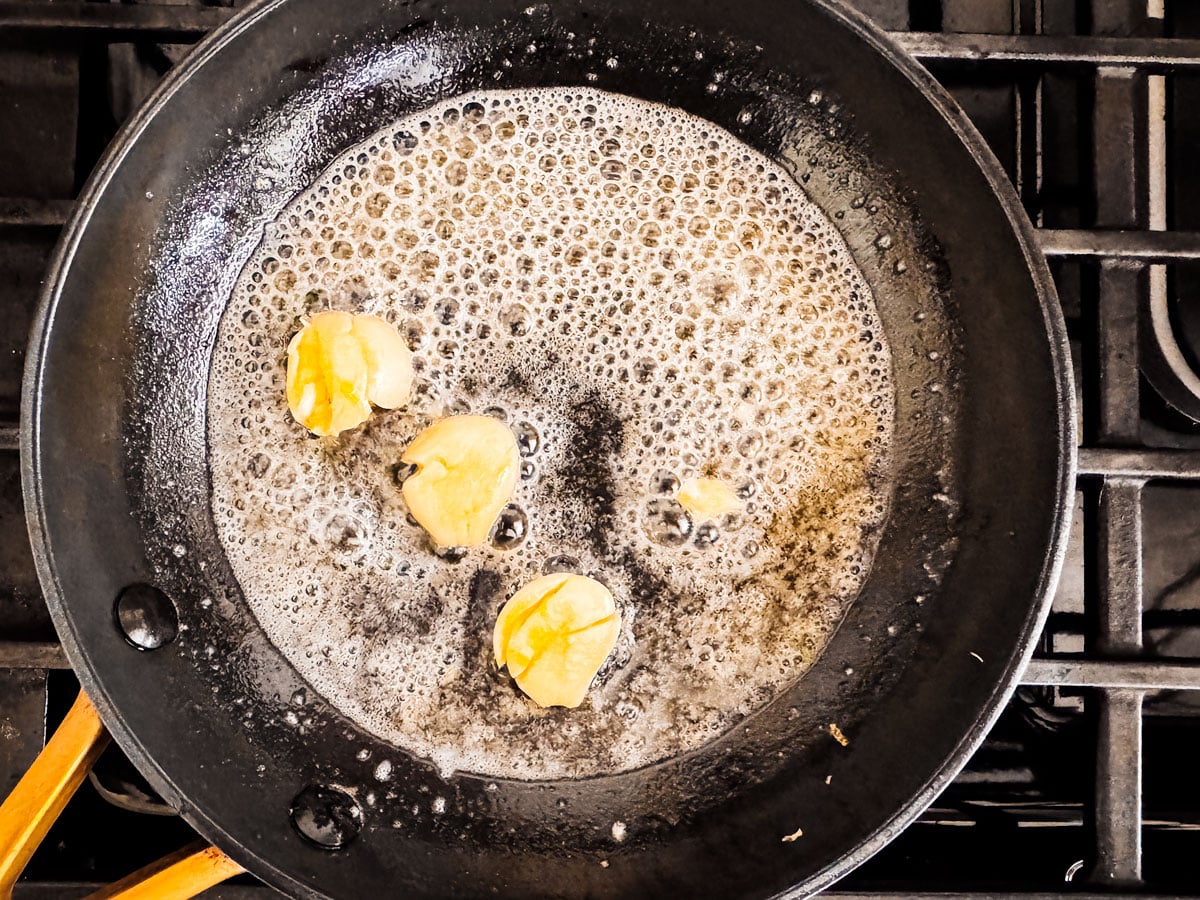
Melt the butter in a small saucepan over medium-low heat. Add the smashed garlic cloves and lemon zest, then reduce the heat to low and simmer for about 3 minutes, infusing the butter with garlic. Stir it often to prevent the butter from burning.
Add the lemon juice and stir well to incorporate. Continue to simmer on low for a minute, then remove the pan from the heat and discard the garlic cloves.
Step 5: Baste the Fish and Serve
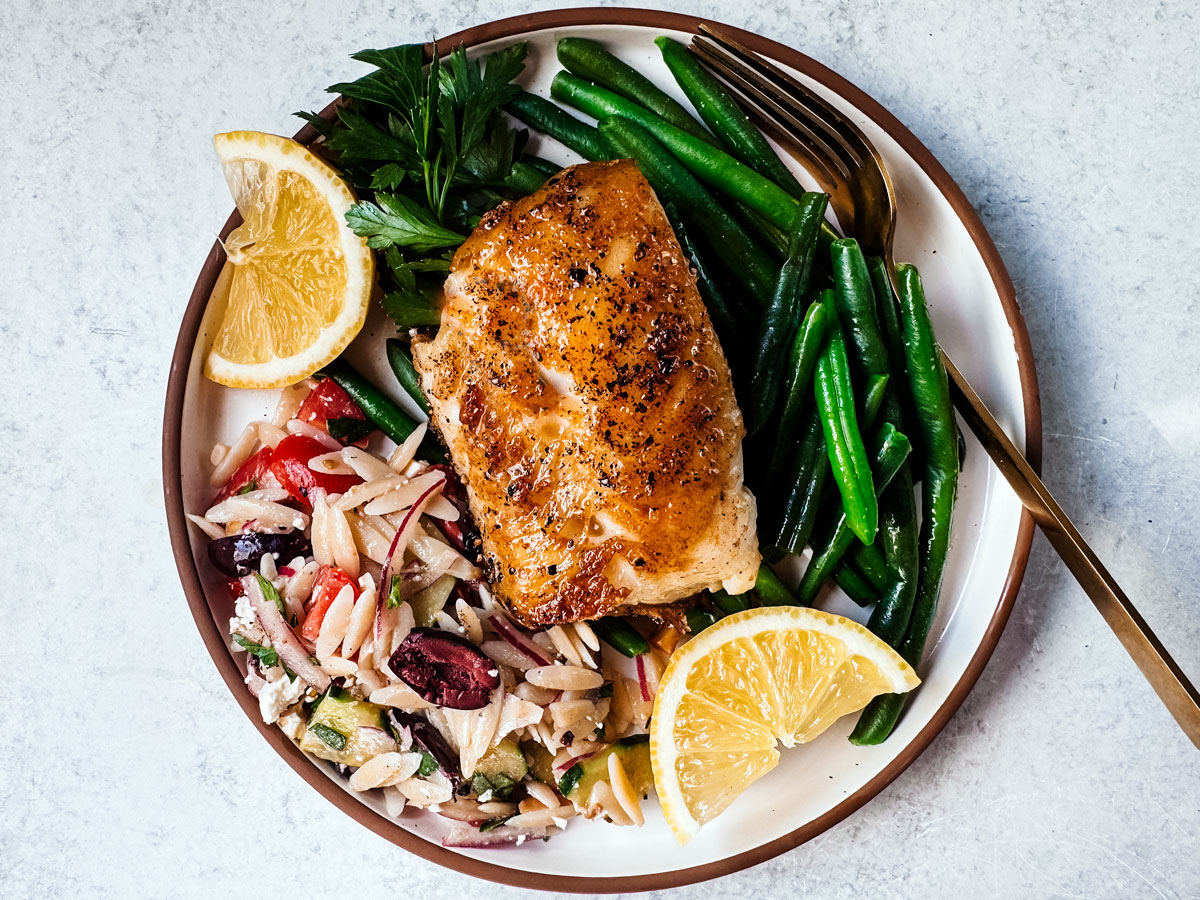
When the sea bass is done, remove it from the oven and carefully transfer the fillet to serving plates. Brush the fillets with the butter, garnish with fresh chopped parsley if you want, and serve.
Substitutions & Variations
- Fish Options: If you can’t find Chilean sea bass, sablefish (black cod) is the closest thing—same oily, buttery richness, similar flake. Turbot and halibut both work too, though they’re leaner; you’ll get the white, delicate texture without quite as much of that melt-in-your-mouth quality.
- Enhancing the Butter: You could add extra flavor with little effort by adding capers, minced shallot, or chopped fresh herbs like thyme, oregano, and parsley.
- Brown Butter Option: This will bring an awesome, warm, nutty flavor to the fish. The best way to achieve brown butter is to melt it in a light-colored pan so you can watch the color. Heat it over medium heat, stirring, until it starts to foam. After about 5-8 minutes, the butter will turn golden and smell toasted. Remove from the heat and transfer to a bowl to stop cooking.
What to Serve It With
Storage & Reheating
- Fridge: Store the fish fillets in an airtight container for up to 4 days.
- Reheat: The best way is to bake low and slow at 300ºF for 10-15 minutes, covered with foil and a small splash of water. You could also reheat the fillets in a skillet over low to medium heat. In a pinch, I’ve never had much of an issue with the microwave, just reheat it in 45-second increments to avoid drying it out.
Frequently Asked Questions
Pan-sear for the crust, and finish in the oven for the interior. If you just pan-fry the fish, the outer crust will dry out and possibly burn before the interior is cooked. On the flip side, just baking it is fine, but you won’t have a nice crust.
It has a complicated history. At one point, it was aggressively overfished after its rebranding, and it became a cautionary tale of sustainability (illegal fishing, collapsing populations, and real environmental damage). Fortunately, many fisheries are now MSC-certified and well-managed, particularly in the South Georgia and Ross Sea regions. Look for that certification on the label; it’s the clearest signal that what you’re buying didn’t come from an illegal or unmanaged source.
High demand, limited supply, and the cost of pulling it from deep, remote Antarctic waters. Add in the fishing quotas that came out of decades of overfishing, and you’ve got a fish that was never going to be cheap. The buttery, flaky texture doesn’t hurt its case either.
Pan-Seared Chilean Sea Bass Recipe
Ingredients
- 4 Chilean sea bass fillets, about 6 oz each, skin on or off, your preference
- 1 teaspoon kosher salt
- 4 teaspoons cracked black pepper
- 2 tablespoon butter
- 4 clove garlic, smashed, *See notes
- Juice and zest of one lemon
Instructions
- Preheat the oven to 375º F.
- Gently pat the fillets with a paper towel to remove extra moisture. Season both sides of each fillet with sea salt (about 1/4 tsp each fillet) and cracked black pepper (about 1/2 tsp each fillet). If you're using skin-on fillets, season the skin.
- Let the fillets sit for at least 15 minutes before cooking. Letting fish come to room temperature will help you get an even cook.
For skin-on fillets
- Heat the oil in an oven-safe skillet (cast iron is best). When the oil is hot and shimmering, place the fillets in it, skin-side down, pressing them down for a few seconds so they don’t seize up.
- Let them cook for 3 minutes, then carefully flip and sear the other side for 2 minutes.
- Transfer the hot pan to the oven and bake for 5-8 minutes, or until the fish is opaque, flakey, and has an internal temperature of 135-140ºF.
For skinless fillets
- Place the fillets in the pan, pressing down for a few seconds. Sear for 2 minutes—you won’t be flipping the fish over.
- Transfer to the oven for 8 minutes. You want an internal temperature of 135-140ºF. The fish should be opaque and flaky.
Garlic Lemon Butter
- While the fish is in the oven, heat a small skillet over medium-low heat. Add the butter. When it's mostly melted, add the smashed garlic cloves and reduce the heat to low, stirring periodically.
- Stir in the lemon juice and zest, and continue to simmer on low for a minute, then remove the pan from the heat. Ditch the garlic cloves.
Serving
- Transfer the cooked fillets to serving plates, brush them with the butter, garnish with fresh, chopped parsley if you want, and serve.
Notes
Nutrition
More Weeknight-Friendly Fish Recipes
Fish & Seafood
Baked Miso Salmon

Fish & Seafood
Crispy Baked Alaska Pollock Recipe

Fish & Seafood
Chili-Seasoned Grilled Mahi Mahi Recipe

Fish & Seafood


This was the perfect gate way seafood dish for my family. Super simple and bursting with flavor! Will be making this again soon.
I’m so so glad, Kathryn! Gotta love when the family approves ;)
BOMB Chilean sea bass recipe!!
We are desperate to get some omega 3 and 6 nutrients into this family’s diet and this recipe delivered. The boys devoured it and as a person who orders sea bass when it’s offered on just about any menu, this serves up all the simple flavors!
Love this recipe so much! Will try it on the grill next time!
We loved this! We had my inlaws for dinner and I was so nervous about doing sea bass because I’d never cooked it before and it’s on the pricey side. Your instructions were easy to follow and the fish turned out amazing! Thank you!
This makes me so happy, Gemma! Way to knock it out of the park! And extra points with the in-laws is never a bad thing ;)
This was everything a gourmet meal should be and then some! Turned out tender, juicy and delicious; worthy of a restaurant, indeed!
Simple and delicious. The technique gave me perfectly cooked and completely whole pieces of fish.
Such and easy recipe and super delicious we loved this for Chilean Sea Bass its our favorite!
Hey Dana! Love your approach to this awesome piece of fish. When fish is this good, you’re bang-on about letting it speak for itself. That being said, I also love the lemon sauce! It lets you control how much you’re using while really amplifying and balancing the flavours. Nice.
Wonderful to see what you’re saying about sustainability. I know some people don’t want to hear it, but it NEEDS to be said. So many fisheries have collapsed, and we just can’t afford to wander blindly into this stuff any more. In addition to your recommendation, I strongly encourage everyone to find ecologically conscious fishmongers. Sadly, not every city will have one, but if you can find one they’re a total godsend. Because they’re so specific about their product, they’ll not only help you make good choices, but they can often share a LOT of really useful information that you don’t get from many of the grocery stores. But hey, I’m preaching to the choir here. :)
Thanks, Sean!
And yeah. I mean, shit. Eating ethically and responsibly *sounds* like a lot of effort, but if you truly care about our planet and the wonderful critters and furries on it, you’ll take the 20 minutes to Google it and see how you can make a difference. The information is easily accessible these days. But I’m happy to keep pushing it with every fish post as a reminder. Haha.