
This post contains affiliate links. Please see our disclosure policy.

If you’ve got cherry tomatoes taking over your counter right now, this is what you do with them. A deeply savory, slightly sweet, properly tangy homemade ketchup recipe that will make you feel accomplished.

Here’s the thing about cherry tomatoes: there are always more than you planned for, and suddenly you’re panic-searching for cherry tomato recipes in order to use them up before they wrinkle.
This homemade ketchup recipe is what happens when you stop pretending you’ll eat them all in a cucumber tomato salad. It’s savory, a little sweet, and tangy in exactly the right proportions. It’s basically everything ketchup is supposed to be before it started coming in a plastic squeeze bottle. (We do love our Heinz, though.) Making ketchup might sound like a project, and it sort of is—but it’s a very small, very worthwhile one.
Table of Contents
Why You’ll Love This Homemade Ketchup
- Fresh ingredients are used, no tomato paste!
- It’s a great way to use up your cherry tomatoes
- You only need 6 simple ingredients
- It contains much less sugar than store-bought ketchup
Ingredient Overview
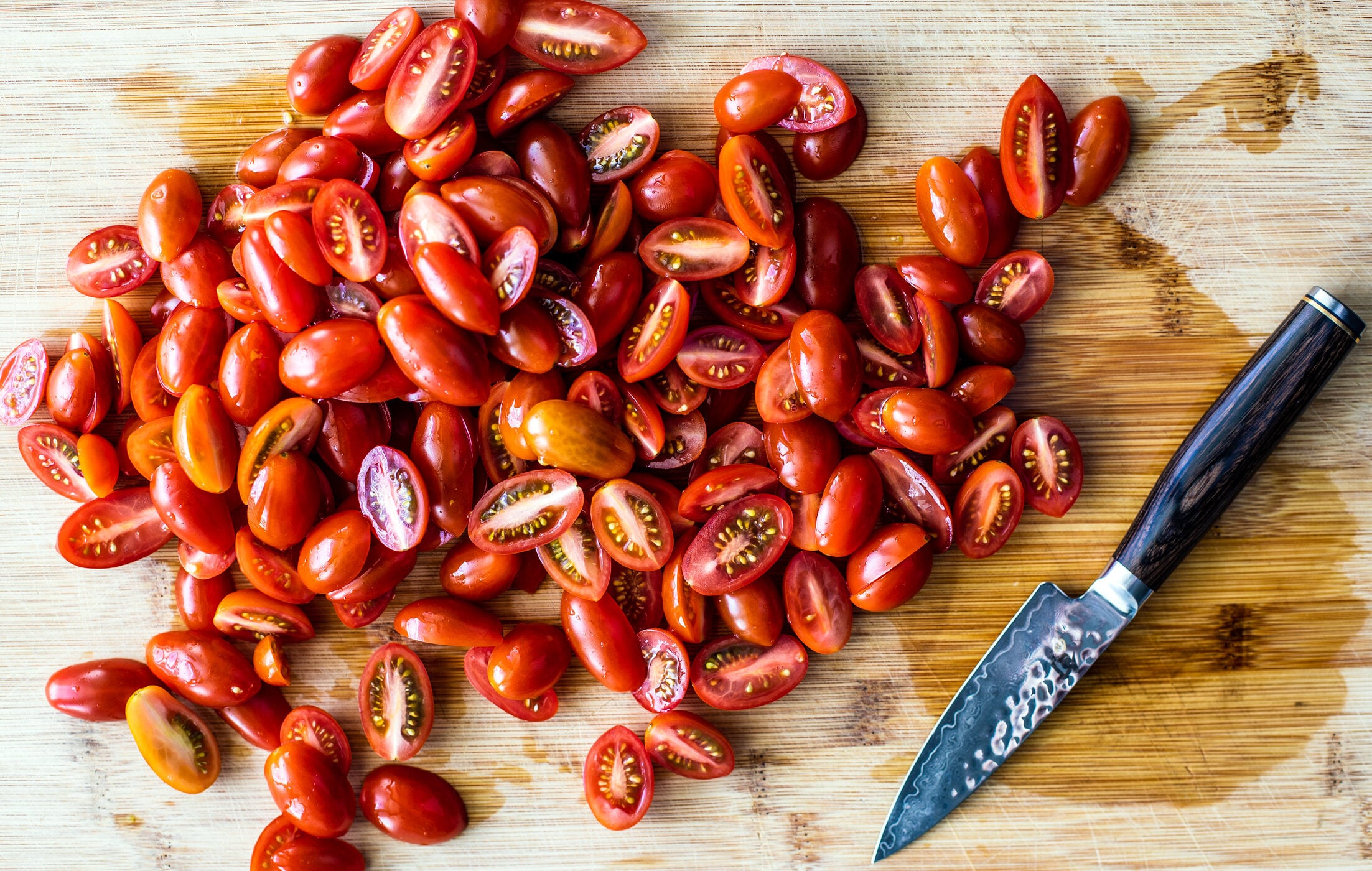
- Cherry tomatoes: Grape tomatoes also work, and I’ve used them many times.
- Red wine vinegar: This adds that vinegary tang you want in your ketchup.
- Honey: To add natural sweetness.
- A full clove: You could omit the clove, but this gives the ketchup a wonderfully deep, rich flavor.
- Worcestershire sauce: A few splashes to round out the savory flavor and tie everything together.
Step-by-Step: How to Make Homemade Ketchup
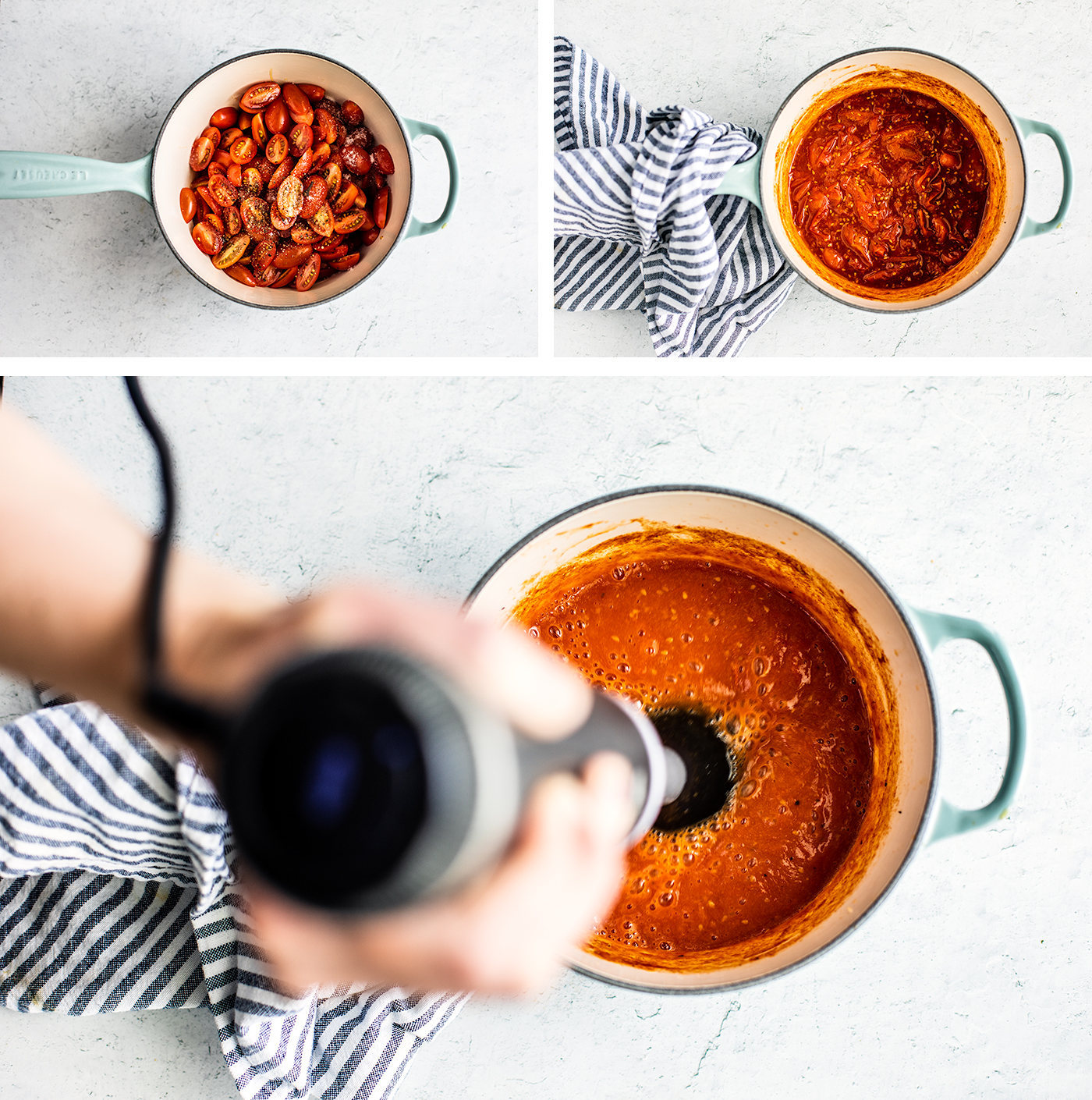
Step 1: Bring Everything to a Simmer
Add the halved tomatoes, red wine vinegar, honey, sea salt, pepper, and clove to a small saucepan. Set the heat to medium and bring everything to a simmer for about 25-30 minutes, stirring occasionally. The tomatoes will burst, and the mixture will become thicker.
Remove the clove with a slotted spoon.
Step 2: Blend to Smoothness
If you’re using an immersion blender, blend the mixture right there in the saucepan until it reaches a smooth texture.
With a regular blender or food processor, carefully transfer the mixture to the appropriate container and pulse until smooth.
Tip: Always take extra care when blending hot liquids and don’t overfill a blender or food processor; if you have to blend in batches, that’s ok.
Step 3: Strain the Mixture
Set up a large bowl and place a colander over it. Slowly pour the ketchup mixture into the colander, then, with a large spoon or ladle, work the mixture through the colander by pressing down and moving in a circular motion.
For an even smoother consistency, run the mixture from the bowl through the sieve a second time. (Recommended.)
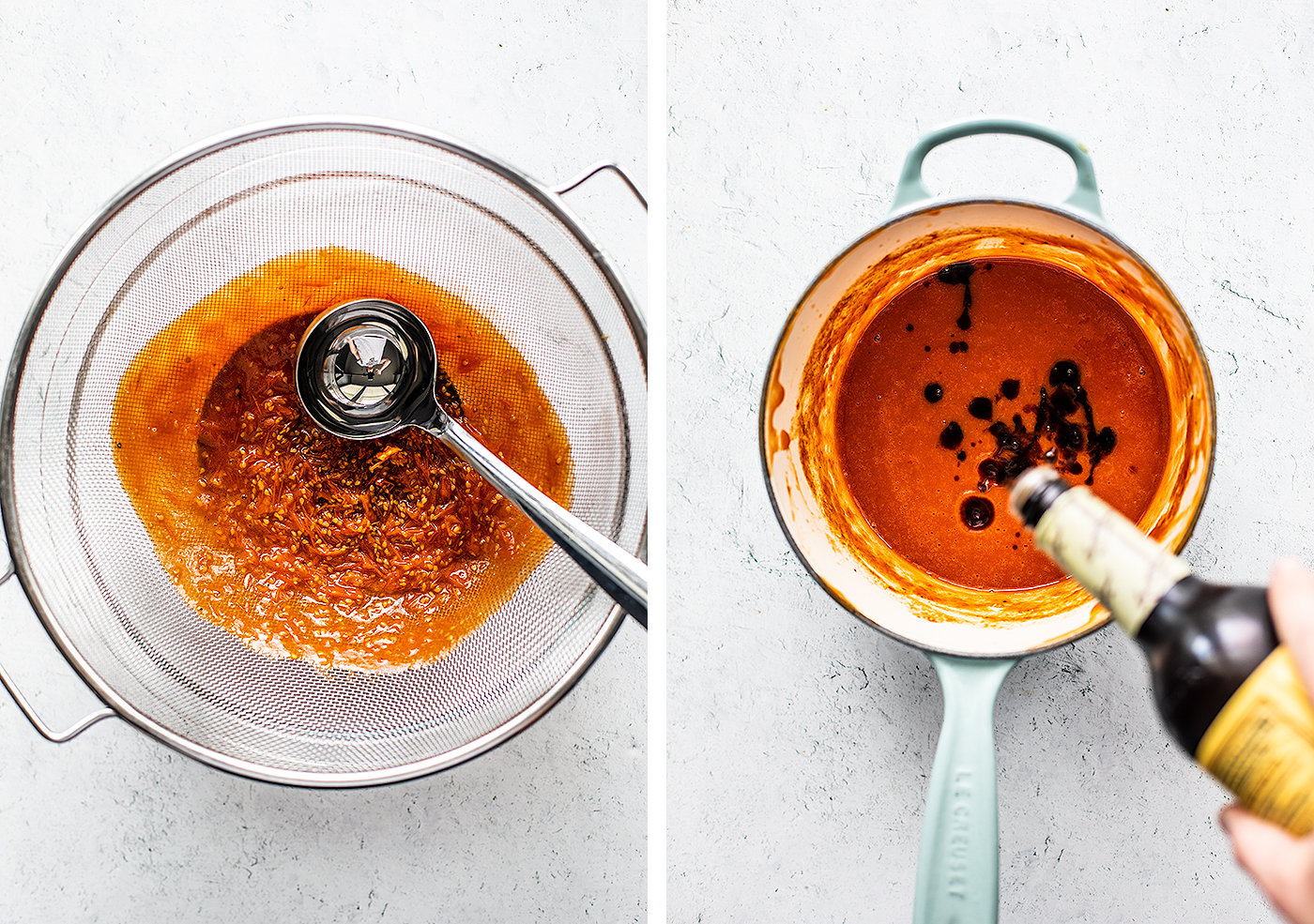
Step 4: Stir In the Worcestershire Sauce
Add the Worcestershire sauce and stir it in. Give the ketchup a taste and adjust salt or sweetness if necessary.
Step 5: Let It Chill for a Bit
Transfer the ketchup to an airtight jar and let it chill in the fridge for an hour or so to thicken further.
Dana’s Recipe Tip
If you’d like your ketchup to be even thicker, transfer the smooth mixture (after it’s been run through the colander twice) to a clean saucepan and bring it to a low simmer. Mix 2 tablespoons of cornstarch with 1/4 cup of cold water, then slowly whisk the mixture into the ketchup until you reach the consistency you prefer.
Substitutions & Variations
- Vinegar: Sherry vinegar or apple cider vinegar is the easiest 1:1 swap. White wine vinegar works if you want something a little gentler, and if you’re feeling creative, a small pour of balsamic vinegar with white wine vinegar adds something interesting.
- Vegan-Option: Skip the honey and go for agave nectar or brown sugar.
- For added depth & richness: Swap the honey for molasses, which adds complexity and a caramel-like sweetness.
- No Worcestershire sauce?: Add 1/2 tablespoon of soy sauce and a quick squeeze of lemon juice. Taste and adjust as needed.
How to Use Homemade Ketchup
- As a dipper for air fryer chicken nuggets, air fryer French fries, and air fryer chicken tenders
- Smeared onto burgers, like a turkey burger or chicken burger
- Brushed over a ground turkey meatloaf
- An addition to other sauces, like this Maple BBQ Sauce, or the sauces used in sweet and sour chicken, Instant Pot Korean pulled pork, Korean BBQ beef skewers, and P.F. Chang-inspired ground chicken lettuce wraps.
Storing Homemade Ketchup
No preservatives means it won’t last as long as store-bought, but you can realistically get a solid three to four weeks out of homemade ketchup if it’s kept in an airtight jar in the fridge. Use a very clean, dry glass jar for best results.
Depends on what you’re after. If you care about what’s in your ketchup—less sugar, no high-fructose corn syrup, actual tomato flavor—then yes, obviously. If you need a squeeze bottle in the door of your fridge at all times and don’t want to think about it, Heinz exists and there’s no shame in that.
At its core, ketchup is tomatoes, sugar, and vinegar. The rest is spices: garlic, mustard, allspice, coriander, cloves, cumin—and the particular combination is what gives each recipe its personality.
Commercial ketchup starts with real tomatoes, typically concentrate or paste, then vinegar, sugar, salt, spices. The tomatoes are real, even though the experience of eating a fresh tomato is not.

Easy Homemade Ketchup Recipe
Ingredients
- 20 oz cherry tomatoes (about 3.5 cups), cut in half, You could also use grape tomatoes
- 1/4 cup red wine vinegar
- 1/4 cup raw honey
- 1 full clove
- 1 teaspoon sea salt
- A few cracks of black pepper
- 1/2 teaspoon Worcestershire sauce
Instructions
- Add the halved tomatoes, red wine vinegar, honey, sea salt, pepper, and clove to a small saucepan.
- Set the heat to medium and bring to a simmer for 25-30 minutes, stirring often. The tomatoes will soften and burst, and the mixture will become thicker.
- When simmering time is up, remove the clove from the sauce. (Use a fork or a slotted spoon to fish it out.)
- If using an immersion blender: blend the mixture in the saucepan until it reaches a smooth texture.If using a regular blender or food processor: carefully transfer the mixture to the proper container and pulse until smooth.
- Set a large bowl on a counter and place a colander over it. Carefully pour the ketchup mixture into the colander, then, with a large spoon or ladle, work the mixture through the colander by pressing down and moving in a circular motion.
- Repeat this one more time for an even smoother texture (optional, but recommended).
- Stir in the Worcestershire sauce, then give the ketchup a taste; adjust salt or sweetness if necessary.
- Transfer the ketchup to an airtight jar and let it chill in the fridge for about an hour to thicken further.
Notes
Nutrition
More Homemade Condiments to Try

Dressings and Spices
Smoky Maple BBQ Sauce

Dressings and Spices
Homemade Caesar Dressing Recipe

Dressings and Spices
Green Goddess Dressing With Greek Yogurt

Dressings and Spices
Dill Pickle Buttermilk Ranch Dressing
View more summer recipes and ways to use up summer produce here!


How long will this last in the fridg?
Hi Roberta, as long as it’s sealed up well in an airtight container, you should get a good 3-4 weeks out of it!
I have a lot of rama tomatoes frozen, do you think they would work ?
Hi Linda—I’m sure that would work! I’d let them thaw then measure them out to 20 oz just like we do for the grape tomatoes. Please let me know how it goes!
Can this recipe be water bath canned?
Hi Rebecca! I haven’t canned this recipe, but I did a little research into this and it looks like you absolutely could. Here’s a link with canning steps for homemade ketchup that seems helpful.
This is such a great recipe and without all the preservatives! I never knew it was this easy; never buying store bought again!
Store bought ketchup is always too sweet for me. This one is wonderful!
This homemade ketchup is SO much better tasting than the bottled variety. We make this all the time!
This was a great way to use up extra tomatoes I had sitting around!! And it turned out great – so much more flavorful than store bought!
Hello. I have a question about the corn starch. Are the measures you indicate in the recipe for the quantities of tomatoes? Thanks!
Hi Sarah, the measurement for the corn starch is based on the quantity used in this recipe, yes. You may find that you don’t need to use the entirety of the slurry for thickening, and if that’s the case, you can discard the rest. Just add enough to get the consistency you desire.