This post contains affiliate links. Please see our disclosure policy.

This easy shoyu ramen recipe proves a restaurant-worthy bowl is well within reach at home, any night of the week. Chewy noodles, endless topping options, and a broth that’s salty, gently spicy, and loaded with umami.
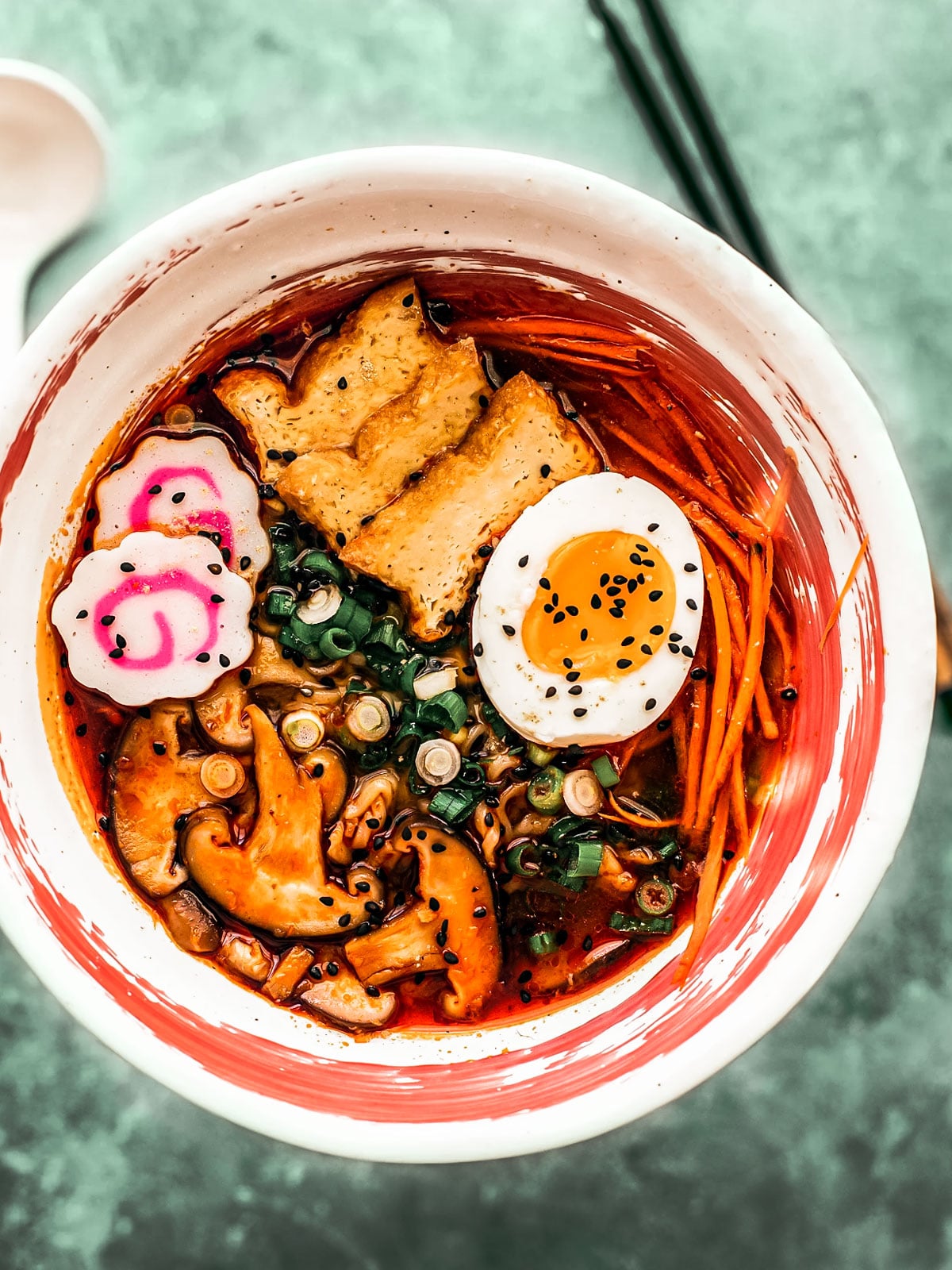
If you’ve fallen in love with my popular homemade ramen bowl and feel ready to step it up, shoyu ramen is a great place to go next. It’s super approachable, with a broth that is salty, slightly spicy, and good enough to just drink from the bowl. (Take it from me, because I have.)
If you’re feeling a bit intimidated, don’t be. This post covers everything from ingredients to dietary & lifestyle substitutions so you can confidently make it your own.
Once you’ve got at-home ramen down pat, give this five-spice chicken ramen recipe a whirl, or curl up with my personal favorite—chicken curry ramen.
Table of Contents
A Few Good Reasons to Make This
- Great for using what’s on hand: A flexible base that adapts well to whatever proteins or vegetables you have in the fridge.
- Ready faster than you’d think: This is a 30-minute meal. The tare comes together quickly, and once it’s made, assembling a bowl takes minutes.
- Better than instant or takeout: You control the seasoning, saltiness, and quality of ingredients from start to finish.
Tips From My Kitchen
I make mistakes so that you don’t have to! Here are some things I’ve learned while testing this recipe…
- Save the sesame oil for the finish—heat breaks it down and turns it bitter, so it’s best drizzled over the bowl right before serving. For simmering your vegetables, stick with a neutral oil like avocado or light olive oil.
- Cook your noodles separately—it’s tempting to boil them right in the broth to save a step, but they’ll soak up a good portion of it, leaving you with less soup than you started with.
Ingredients at a Glance
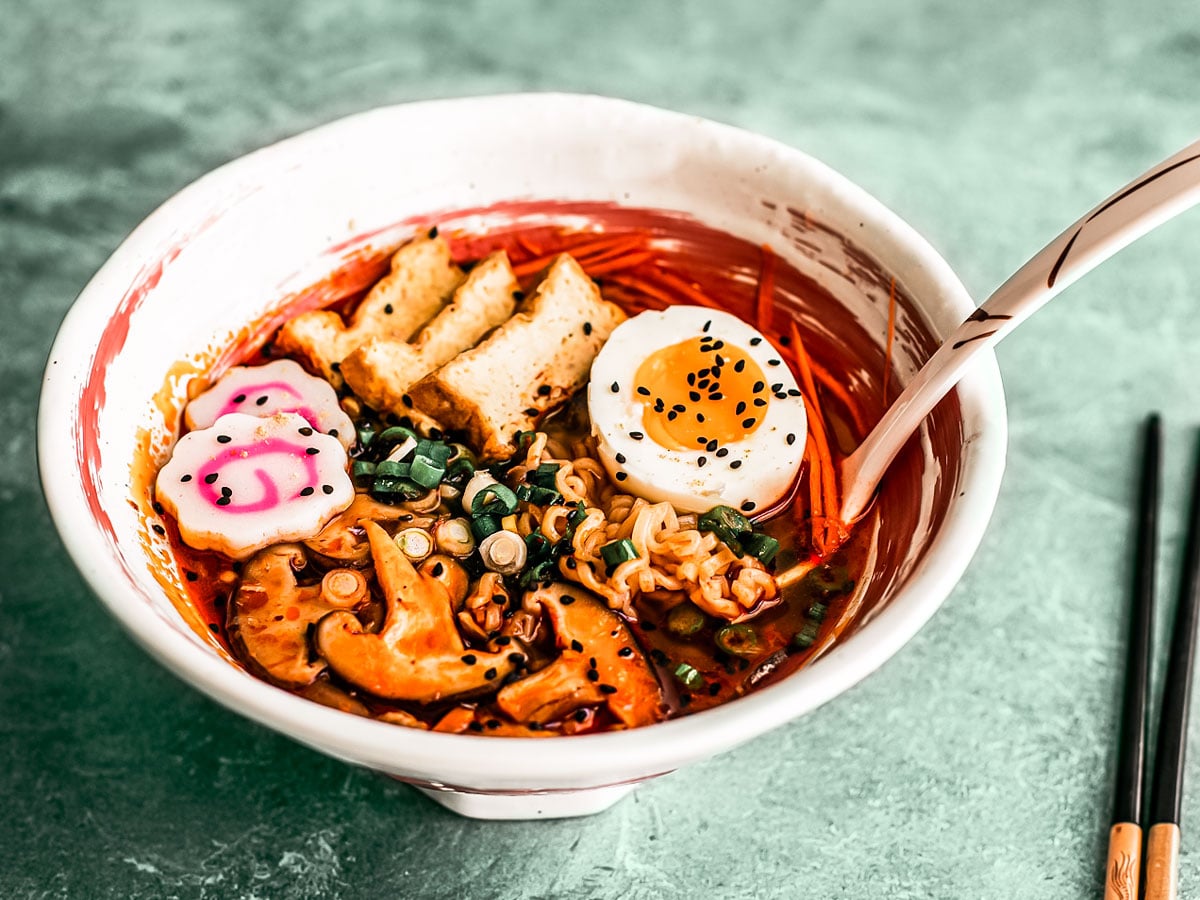
A quick look at some of the essentials before we dive into the recipe:
- Meat stock: Traditional shoyu ramen often relies on a double soup—a blend of an animal-based stock with a marine dashi. This gives it a deeper, more layered flavor than a single stock alone could give you.
- Dashi stock: To make this recipe easy and approachable, an instant dashi stock is used. See below for instructions on creating your tare from scratch.
- Broad bean chili paste (Doubanjiang): Sometimes labeled toban djan, is what gives spicy shoyu ramen its savory depth and heat. It’s the ingredient doing the real work here.
- Mirin: A sweet Japanese rice wine that offsets the saltiness of the soy sauce, which is available in most basic grocery stores.
- Ginger root: It usually goes into the broth along with other aromatics like garlic and green onion, giving the broth a fresh, warm kick.
- Noodles: To enjoy shoyu ramen as intended, kansui noodles are the traditional choice. Kansui noodles are wheat noodles made with kansui, an alkaline solution, which is what gives them that springy texture, chewy bite, and faintly yellow color. You can of course go with the noodles from an Instant ramen pack for convenience.
- Premium Dark Soy Sauce (Koikuchi): Kikkoman Tokusen (Premium) or Yamasa Marushin both offer a cleaner, rounder umami than standard cooking soy sauce.
How to Make Shoyu Ramen
Step 1: Stir Up the Dashi Broth
Stir 2 teaspoons of instant dashi into 2 cups of warm water until it dissolves; set aside.
Step 2: Prep Toppings
Wash, cut, chop, and cook any of the toppings you’ve chosen to use so they’re ready to go when the broth and noodles are done. Set them aside. (Check out topping suggestions here.)
Step 3: Simmer the Veggies
Heat avocado oil in a large saucepan over medium heat. When the oil is warm, add the ginger and simmer for 30 seconds.
Add the sliced shiitake mushrooms and sauté them until they’ve softened, about 3 minutes. Stir in the garlic and simmer for just 30 seconds, until fragrant.
Step 4: Add the Chili Paste
Stir the chili paste into the pot, covering the mushrooms.
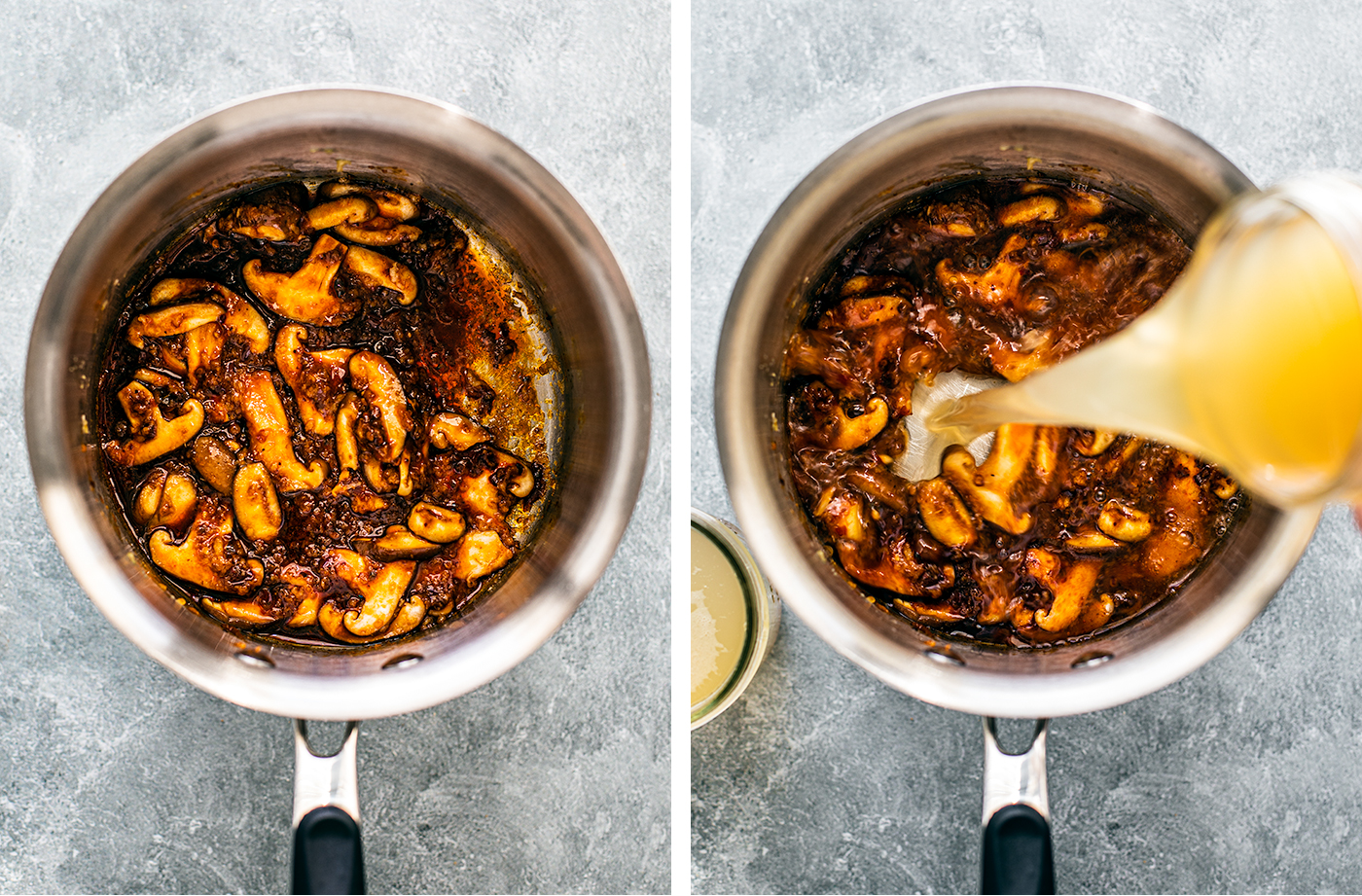
Step 5: Create the Broth
Add the soy sauce, mirin, salt, and sugar. Pour the chicken stock and dashi stock into the pot, and give everything a good stir. Let it simmer on low for at least 15 minutes.
Step 6: Cook the Noodles
At this point, you can cook your noodles as per the directions on the package.
Step 7: Build Your Bowls!
Give the broth a little taste test and adjust the heat and soy sauce to your liking.
Transfer strained noodles to ramen bowls (or the largest soup bowls you have), and spoon the broth over the noodles.
Garnish the ramen with your toppings of choice!
If You’re Making Dashi From Scratch
What You’ll Need:
- Water: 4 cups
- Kombu: 10 grams (about a 4×4-inch piece)
- Katsuobushi: 1 cup dried bonito flakes
Step-by-Step Instructions:
- Soak the kombu: Wipe it gently with a damp cloth, leaving behind the white powdery residue (it’s flavor, not dirt). Place it in a pot with the water and let it soak for at least 30 minutes, or up to overnight in the fridge.
- Heat gradually: Set the pot over medium-low heat and let the water warm slowly, about 10 minutes.
- Remove the kombu: Once tiny bubbles start forming around the edges of the pot, pull out the kombu. Don’t let the water boil, or the stock turns slimy and bitter.
- Add the bonito flakes: Bring the liquid to a quick boil, skim off any foam, then turn off the heat and add the katsuobushi all at once.
- Steep: Resist the urge to stir. Let the flakes sink and steep undisturbed for about 10 minutes.
- Strain: Pour the liquid through a fine-mesh sieve lined with a paper towel or cheesecloth. Don’t press or squeeze the flakes—that’s what invites bitterness in.
Ramen Toppings
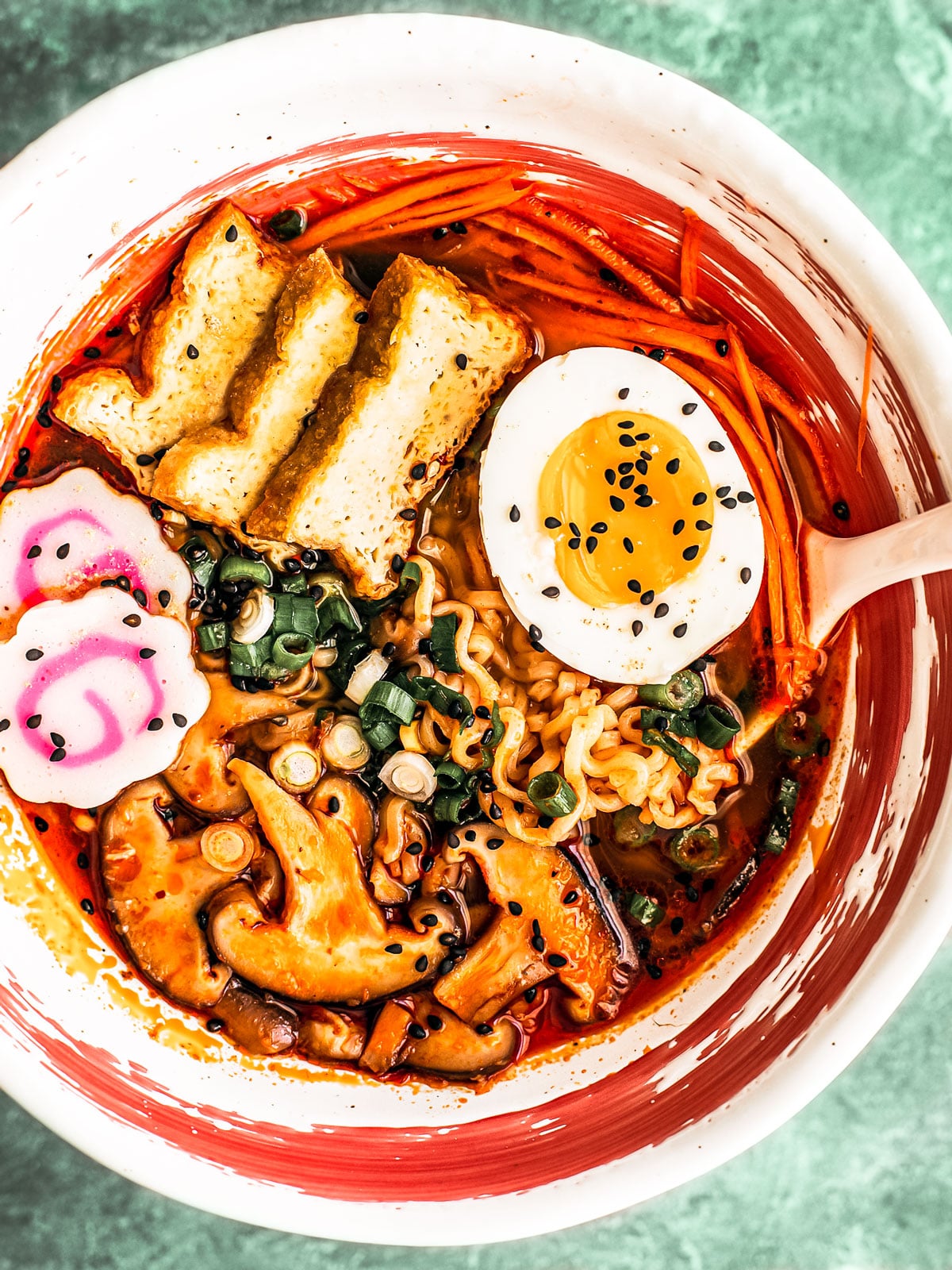
- Vegetables: julienned carrots, scallions, seared baby bok choy, sautéed broccolini, enoki mushrooms, corn, edamame, leafy greens, shredded cabbage, bean sprouts, kimchi
- Proteins: chasu pork (pork belly), sliced or shredded chicken breast
- Plant-based proteins: crispy tofu, Aburaage, tempeh
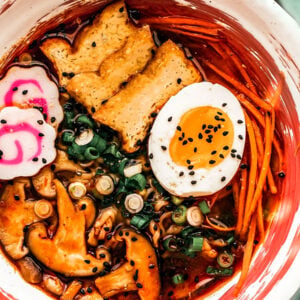
- Other options: soft-boiled egg, Narutomaki, sesame seeds, furikake rice seasoning, a drizzle of sesame oil, Sriracha, chili crisp, sambal oelek
Make It Your Own
- Vegetarian option: Swap the traditional meat or fish stock for an umami-rich vegetable dashi, then season it with a savory soy-based tare.
- Kid-friendly version: For a non-spicy substitute for chili bean paste try doenjang (Korean fermented soybean paste), or miso mixed with just a small splash of soy sauce.
- Gluten-Free: Use millet & brown rice ramen noodles, tamari or coconut aminos in place of soy sauce, and GF chicken or vegetable stock, boosted with dried shiitake mushrooms or kombu for extra savory depth.
- Low-Carb/Keto Diet: Shirataki noodles, packaged keto-friendly ramen, and spiralized veggies like zucchini or sweet potato do the trick.
Storage Tips
- Shoyu Broth: will last in the fridge for 3-5 days sealed in an airtight container.
- Cooked ramen: let cool, then toss with a tiny drop of sesame oil to prevent them from sticking together. Refrigerate within 2 hours of cooking in an airtight container for up to 4 days.
Shoyu Ramen Recipe
Ingredients
- 1 tablespoon avocado or olive oil, more if necessary
- 3 cloves of garlic, grated to a paste or finely minced.
- 1 tablespoon grated fresh ginger
- 1 cup sliced shiitake mushrooms
- 1 tablespoon spicy chili bean paste
- 3 tablespoon low-sodium dark soy sauce
- 1/2 tablespoon mirin, can be substituted with rice wine vinegar.
- 1/2 teaspoon sea salt, more if needed
- 1 teaspoon sugar
- 2 cups chicken stock
- 2 cups dashi stock
- 6 oz ramen noodles, divided
- *See notes for topping ideas
Instructions
- Heat the sesame oil in a large saucepan over medium heat. When the oil is hot, add the garlic and ginger and let them simmer for about 30 seconds, stirring often.
- Add the shiitake mushrooms and sauté until they've softened, about 2-3 minutes.
- Spoon the chili paste into the pot, then stir it around to coat the mushrooms.
- Add the soy sauce, rice wine vinegar, salt, and sugar. Give it a quick stir, then pour the chicken and dashi stock into the pot; stir again.
- Allow the soup to simmer for about 15 minutes. While it simmers, cook your ramen noodles, your egg (see notes), and prepare your toppings.
- After the soup has simmered for about 15 minutes, give it a taste test and adjust the heat and soy sauce to your liking.
- Strain the noodles when they're ready, then transfer them to a large bowl. Spoon broth over the noodles in the bowl, and then garnish with your toppings.
Notes
- Vegetables: julienned carrots, scallions, seared baby bok choy, sautéed broccolini, enoki mushrooms, corn, edamame, leafy greens, shredded cabbage, bean sprouts, kimchi
- Proteins: chasu pork (pork belly), sliced or shredded chicken breast
- Plant-based proteins: crispy tofu, Aburaage, tempeh
- Other options: soft-boiled egg, Narutomaki, sesame seeds, furikake rice seasoning, a drizzle of sesame oil, Sriracha, chili crisp, sambal oelek


Such a perfect ramen. Thank you so much for posting this recipe. I live 110 miles from nearest ramen restaurant so love that I can make my own GOOD ramen. Ive made this at least 6 times.
I’m so so glad you’ve been enjoying this, Kathy! The ways you can upgrade instant Ramen at home are amazing. Thanks for taking a moment to pop in with a rating and feedback! I really appreciate it.
I just tried this Shoyu Ramen recipe, and it turned out amazing! The flavors were spot on, and I loved the tips you provided for the broth. Definitely a new favorite in my recipe rotation—thank you for sharing!