
This post contains affiliate links. Please see our disclosure policy.

Inspired by the classic pasta al limone, this 30-minute lemon pasta with shrimp is light, zesty, and exactly what you want for your weeknights. Peppery arugula adds bite, the shrimp bring garlicky richness, and the whole thing comes together with just 8 ingredients. It’s bright, unfussy, and won’t leave you in a food coma.
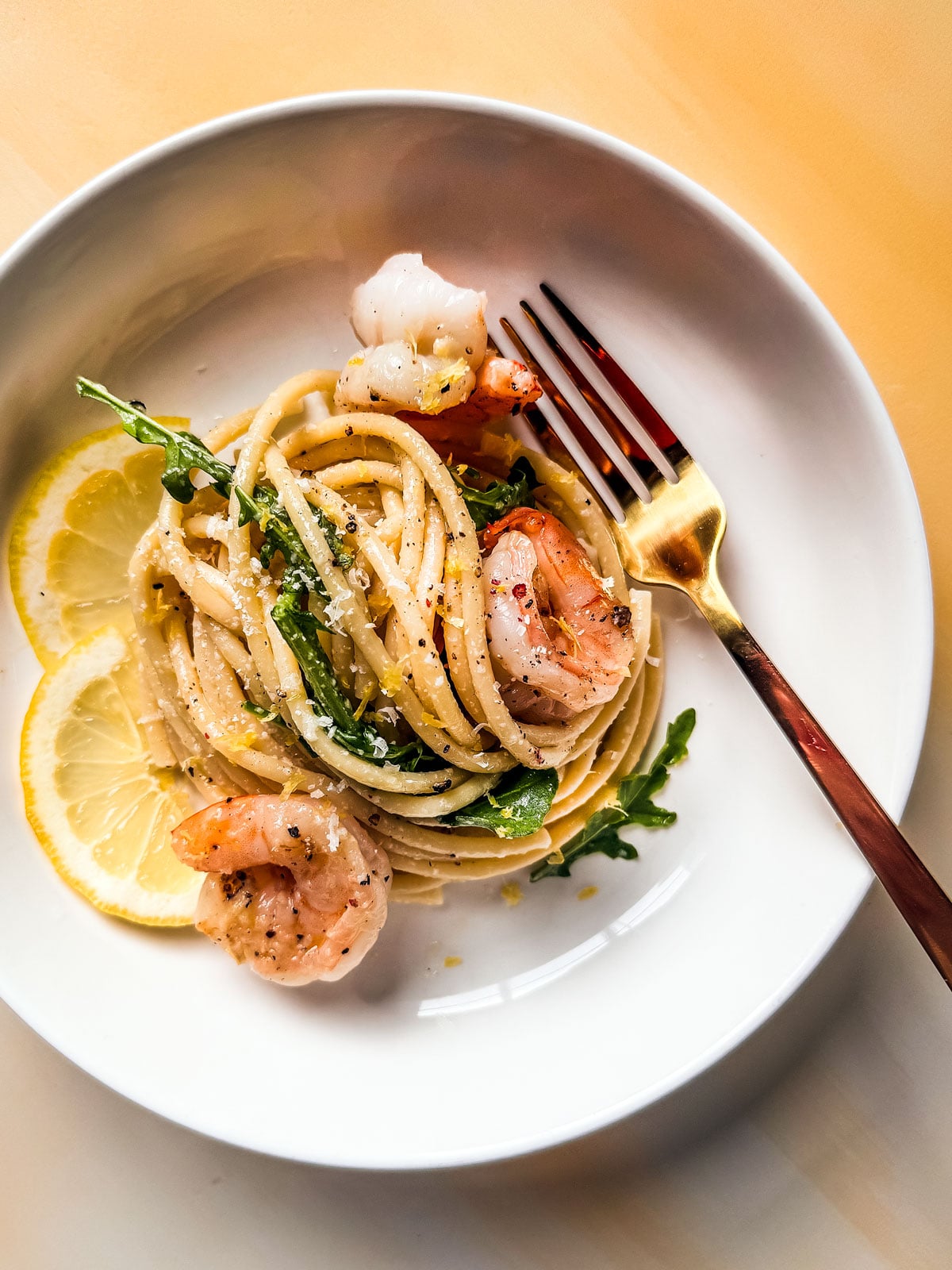
My lemon pasta with shrimp is the kind of pasta dish that earns a year-round spot in your rotation. It’s light and lemony enough for peak summer nights, but also the perfect citrusy pick-me-up when winter feels endless.
Inspired by classic pasta al limone, this version leans into that signature silky brightness—only here, we’re leveling things up with peppery arugula and juicy shrimp. (Not traditional, but definitely delicious.) It comes together in under 30 minutes, making it ideal for a quick weeknight dinner or an easy-but-elegant date night in. Pro tip: stick with long noodles like spaghetti, linguine, or bucatini to catch all that glossy, lemony sauce.
Want more easy pasta dinners? Consider this clam pasta with tomato sauce. My husband didn’t know he could enjoy canned clams until I whipped that up for him—a favorite from my childhood. Your family will also rave about this mushroom ravioli with brown butter. And the easiest of all? My 15-minute spaghetti aglio e olio.
Table of Contents
Recipe Modifications
- Greens—Arugula doesn’t appease every palate, so feel free to use baby spinach for a milder flavor.
- Pasta—I do think long thin pasta works best for this recipe (think: spaghetti, bucatini, fettuccine, etc.), but if you prefer short-cut pasta, or it’s all you have, you can use that.
- Vegetables—In the thick of summertime harvesting, it’s common to want to find uses for your veggies, especially if you’re desperate for cherry tomato recipes! (Who isn’t?) This recipe welcomes things like parmesan-roasted zucchini, roasted cherry tomatoes, broccoli, and even mushrooms or cut-up grilled asparagus.
- Make it spicy—If you want to add a punch to your pasta, you can add some red pepper flakes to the shrimp while you cook them.
- Low-carb—You can use zucchini noodles for a low-carb option.
- Fresh herbs—Liven things up with fresh basil or parsley.
Ingredient Notes

A full ingredient list with exact measurements can be found in the recipe card below.
- Shrimp—Look for wild-caught U.S. shrimp, which are typically considered sustainable due to the more responsible fishing practices and stronger regulations. For extra info, you can check out my guide to buying seafood & fish.
- Pasta—I do think long thin pasta works best for this recipe (think: spaghetti, bucatini, fettuccine, etc.), but if you prefer short-cut pasta, or it’s all you have, you can use that.
Recipe Notes
- Shrimp cooks very quickly, so be sure to keep a close eye on it. Once the shrimp is opaque and forms a “C” shape, it’s done.
- When zesting your lemons, be sure to skim just the top yellow parts. If you get too deep into the white part (called the pith) beneath the yellow skin, you can end up with a strong, bitter flavor in your dish. I find that my microplane does a great job at getting a light zest.
- Grate the Parmesan cheese with a microplane so it’s fine and fluffy, which will help it melt nicely.
Why Is My Sauce Breaking?
Just like with a traditional pasta al limone, when adding the Parmesan cheese, it should melt nicely. This will create a light and creamy sauce that coats the noodles. If the cheese hardens and becomes clumpy and stringy, the sauce is broken. This will happen for the following reasons:
- The pan is too hot—You’ll see in the directions below, I create my lemony butter sauce first, then remove the pan from the heat and then start cooking the pasta. By the time the pasta is done cooking, the pan and butter sauce will have cooled enough. It might be tempting to just make your lemon butter sauce close to when your pasta is done cooking, but trust me—you want that 8 minutes to let the pan cool.
- Don’t skip the pasta water—Pasta water is the MVP. Its starchiness works like an emulsifier, helping the Parmesan melt down into something glossy and luxurious as you stir—no clumps, no grease, just silky perfection! Bonus: it helps the sauce actually stick to the pasta instead of sliding right off.
How to Make Lemon Pasta With Shrimp


This is a quick how-to for this recipe to give you an idea of how it’s done at a glance. Find the full details in the recipe card below.
Cook the shrimp. Heat the oil and butter in a large skillet over medium-low heat for 1-2 minutes, or until the butter has melted. (Err on the side of low heat to prevent making a brown butter sauce.) Add the minced garlic and sautée for 30 seconds. Gently pat the shrimp dry and place them into the pan. Cook them for 1-3 minutes per side, depending on their size. An easy way to tell that the shrimp are ready is that they become opaque and form a “C” shape. When done, transfer the shrimp to bowl with a slotted spoon.
Infuse the butter sauce. Add 1/2 of the lemon zest to the pan of butter and oil. Let it simmer on low for about 2 minutes. Add 1/2 of the lemon juice to the pan, and simmer for another 2 minutes. This will infuse the sauce with that lemony goodness we’re after. Remove the pan from the heat and set it aside.
Cook the pasta. Bring a large pot of salted water to a boil. Add in the pasta, cooking it until al dente. This should take about 7-8 minutes, depending on the pasta type. (Check the package instructions). The package will typically note how many minutes to boil until al dente). When done, reserve 1 cup of the hot pasta water, and drain the pasta.
Bring it together. Transfer the cooked pasta to the large saucepan of lemon butter. Pour in the hot pasta water, remaining lemon juice, lemon zest, salt, pepper, and cheese. As soon as you add that cheese, start tossing and stirring the pasta vigorously. You want it to melt into the sauce to create a smooth and glossy sauce. Once the noodles are coated in that nice and creamy sauce, toss in a handful of arugula. Add the shrimp, and toss to combine.
To Serve—Serve with grated Parmesan and lemon zest.

What to Serve With Lemon Pasta With Shrimp
- Salad—There’s always room for a simple Caesar salad with homemade Caesar dressing. (You can toss in some air fryer croutons to be really fancy!) You could also just whip up an easy side salad.
- Vegetables—My Parmesan-roasted zucchini or this easy grilled asparagus are the perfect veg side for this pasta.
- Bread—A nice fresh hunk of homemade Dutch oven bread is a no-brainer.
Frequently Asked Questions
I’m happy to say that no, you’re sauce won’t curdle. Despite the sauce being creamy, we aren’t using heavy cream or milk. The parmesan cheese will melt quickly once added to the hot pasta at the end. Also, the starch in the pasta water acts as an emulsifier. This helps bind the fats and liquids in the sauce to create a nice, smooth, cohesive sauce.
If you’re sauce comes out with a bitter flavor, you’ve zested your lemon too far into the white substance underneath. This is called the pith. The pith is very bitter, and when cooked into a dish, it can create a bitter flavor it. Always zest citrus over it’s skin lightly, caring not to get too deep into the pith.
Storage & Reheating
- Leftovers can be stored in an airtight container in the fridge for up to 3 days.
- To reheat, transfer the pasta and shrimp to a microwave-safe bowl and heat in the microwave in 15-second increments until warmed through.
CRAVING MORE RECIPES? Hit that subscribe button and get the good stuff delivered straight to your inbox.

Easy Lemon Pasta With Shrimp (Pasta al Limone)
Ingredients
- 12 oz long-cut pasta (bucatini, spaghetti, linguini, etc.)
- 1 lb shrimp—peeled, deveined, and tail off
- 3 tablespoon olive oil
- 4 tablespoon butter
- 4 garlic cloves, minced or grated to a paste using a microplane
- 2 lemons, zested and juiced
- 1 cup packed freshly grated Parmesan, + more for garnish, When I write packed, I mean that the measuring cup should be fully packed with cheese. If you press down on the grated cheese, it should reach the top brim and not go below.
- 2 handfuls of baby arugula
- Sea salt and cracked pepper, to taste
Instructions
- Lightly pat the shrimp dry and transfer them to a mixing bowl. Drizzle it with 1/2 tablespoon of olive oil, add the minced garlic, and season with a bit of salt and pepper. Set aside.
- In a large saucepan, heat another 1/2 tablespoon of olive oil and 1 tablespoon of butter over medium-low heat. Once the butter has melted, add the garlic shrimp to the pan and cook for 1-3 minutes per side, depending on size. They'll be done when they're opaque and form a "C" shape. Transfer them to a bowl with a slotted spoon and set them aside.
- Add the remaining 2 tablespoons of olive oil and 3 tablespoons of butter to the pan over medium-low heat, melting the butter.
- Add 1/2 of the lemon zest to the pan and simmer for about 2 minutes, whisking. Then add 1/2 of the lemon juice to the pan, and simmer for another 2 minutes, whisking occasionally. Remove the pan from the heat and set it aside to cool. (See notes.)
- Bring a large pot of salted water to a boil. Add in the pasta and cook until al dente (this should take about 7-8 minutes, depending on the pasta type. Check the package notes.) When done, reserve 1 cup of the hot pasta water before draining the pasta.
- Transfer the cooked pasta to the large saucepan of lemon butter.
- Add the hot pasta water, the remaining lemon juice, lemon zest, salt, pepper, and cheese. As soon as you add that cheese, start tossing and stirring the pasta vigorously. It should melt to create a smooth and glossy sauce.
- Once the noodles are coated, toss in a few handfuls of arugula along with the shrimp, and toss to combine.
- Serve the pasta with extra grated Parmesan and lemon zest.


Super healthy and lots of flavour for a vegetarian dish
Thanks, Don! Glad you enjoyed it.
Made this last night, so delicious!
This was so light and simple and refreshing. Thank you for the recipe!
I think we’re just not crazy about arugula!
That’s totally possible and understandable! I didn’t like it at all the first few times I tried it. I think it’s an acquired taste. Maybe spinach would be more enjoyable in this recipe for you.